
Comparison of Car Wash Tank Types
Traditional cement tanks have low initial costs, but require a long construction period of 7-20 days for maintenance, are immovable, prone to cracking and settling, and difficult to meet environmental standards for sewage leakage.
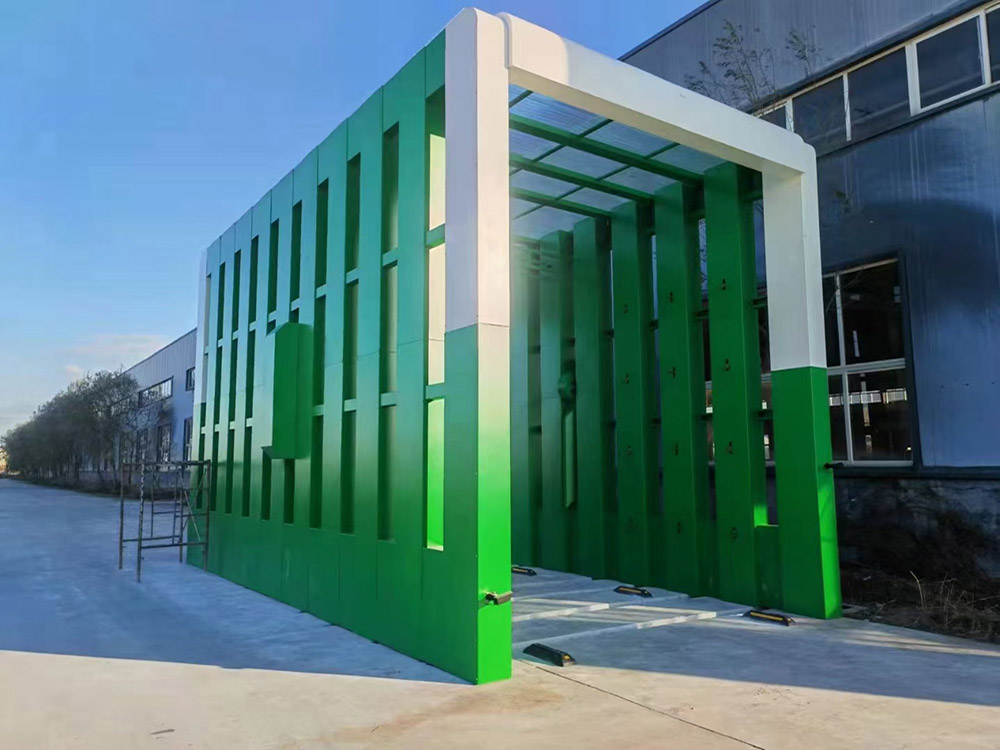
Steel structure moving groove: installation is extremely fast, taking 2-4 hours to dismantle on site, and can be reused. Single cost reduction of over 70%, equipped with a three-stage sedimentation tank for leak prevention.
Bearing capacity and service life: Steel structures with a bearing capacity of over 150 tons and a service life of over 8 years can flexibly migrate and adapt to multiple projects for cyclic use.
Comprehensive cost: The initial purchase cost of steel structures is slightly higher, but the long-term comprehensive cost is lower, and the return on investment is significantly improved.

Applicable scenario matching
Short term/frequent transition projects: Priority is given to steel structure relocation, with low transition costs and higher return on investment, without the need for demolition and reconstruction.
Environmental strict inspection period project: Choose steel structure, quickly deploy and accept, standard three-level sedimentation tank to avoid the risk of fines.
Multi project/long-term engineering: Steel structure design is superior, with one set of equipment serving the entire lifecycle, saving time, effort, and money, with a lifespan of over 8 years
Terrain restricted site: Suitable for steel structure, no need to harden the ground, flexible to adapt to various terrains, and easy to lift and transfer.
High load demand scenarios: such as cleaning large construction vehicles (dump trucks, excavators), steel structures with a load capacity of 150 tons or more are more reliable, safe, and stable.
 English
  German
  French
  Portuguese
  Japanese
  Russian
  Italian
  Spanish
  Arabic