
Heavy-duty construction equipment—excavators, dump trucks, bulldozers, and loaders—operates in the harshest environments, accumulating layers of dirt, mud, oil, and debris that can compromise performance, safety, and compliance. Choosing the right engineering vehicle washer for these machines is critical, but with a variety of types available on the market, it can be challenging to determine which one is best for your needs. Each type of washer offers unique advantages and is designed for specific applications, so understanding the differences between them is key to making an informed decision. In this article, we’ll break down the most common types of engineering vehicle washers, their features, and which ones are best suited for heavy-duty construction equipment.
1. High-Pressure Cold-Water Engineering Vehicle Washers
High-pressure cold-water washers are one of the most common types used in construction, and for good reason. They rely on high water pressure (typically 2,000 to 4,000 PSI) to blast away dirt and debris, making them effective for most routine cleaning tasks. Cold-water washers are simple to operate, require minimal maintenance, and are generally more affordable than hot-water models.
Best suited for: Heavy-duty equipment that primarily accumulates dirt, mud, or gravel. They’re ideal for construction sites where oil and grease contamination is minimal. Cold-water washers are also a good choice for sites with limited access to electricity or where portability is a priority, as many models are gas-powered.
Limitations: Less effective at breaking down oil, grease, or stubborn stains. They may require more water or longer cleaning times for heavily soiled equipment compared to hot-water models. Not recommended for sites where oil or chemical contaminants are common.
2. High-Pressure Hot-Water Engineering Vehicle Washers
High-pressure hot-water washers are designed for tough cleaning tasks, using heated water (typically 140 to 200 degrees Fahrenheit) combined with high pressure to break down oil, grease, and caked-on dirt. The heat softens contaminants, making them easier to remove, which reduces cleaning time and water usage compared to cold-water models.
Best suited for: Heavy-duty construction equipment that encounters oil, grease, or chemical residues—common in industrial construction, mining, or road construction sites. They’re also ideal for sites where equipment is heavily soiled and requires frequent cleaning. Hot-water washers are available in electric or gas-powered models, with electric models better suited for indoor or enclosed areas (as they produce no exhaust).
Limitations: More expensive upfront than cold-water models. They require more maintenance, as the heating element and related components need regular checks. Gas-powered models are less portable than cold-water gas models due to the additional weight of the heating system. Electric models require access to a reliable power source.
3. Automatic Roll Brush Engineering Vehicle Washers
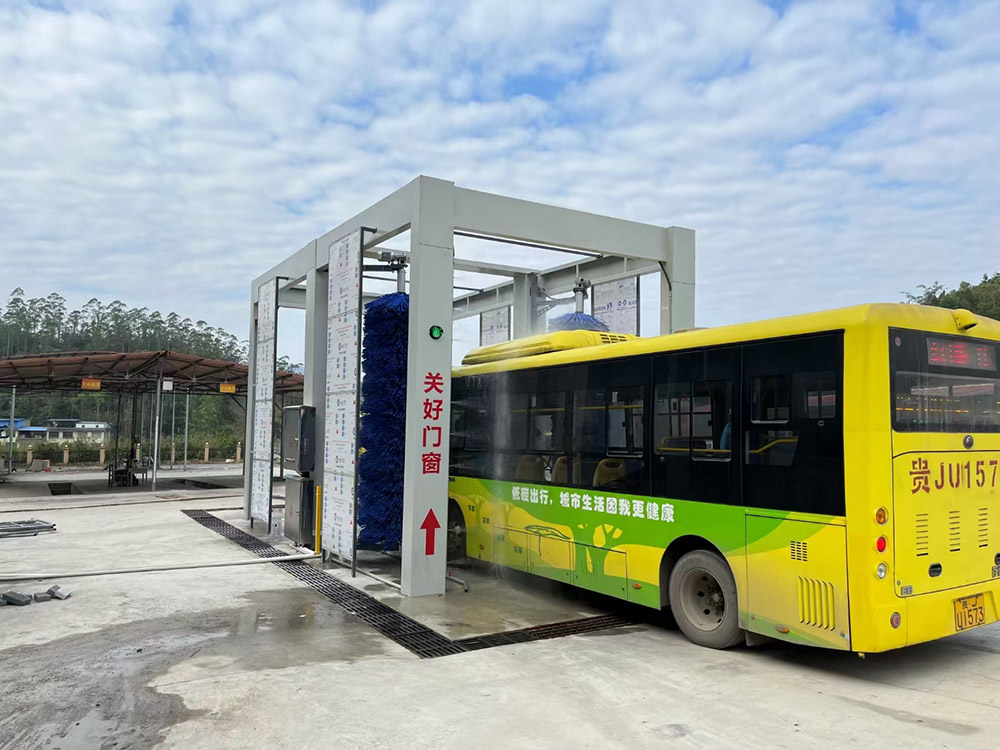
Automatic roll brush washers are designed for high-volume cleaning, using rotating brushes and high-pressure water jets to clean vehicles as they pass through a fixed structure. They’re fully or semi-automatic, requiring minimal operator input, and can clean a heavy-duty vehicle in just a few minutes.
Best suited for: Construction sites with large fleets that require frequent cleaning (e.g., daily or multiple times per day). They’re ideal for sites where labor is limited or where consistency in cleaning is important. Automatic roll brush washers are typically installed at the entrance or exit of the site, ensuring that vehicles are clean before leaving (helping with compliance and reducing road contamination).
Limitations: High upfront installation and maintenance costs. They’re fixed in place, so they can’t be moved to different areas of the site. Less effective at cleaning hard-to-reach areas, such as undercarriages or crevices, compared to manual or semi-automatic pressure washers. Not ideal for sites with small fleets or infrequent cleaning needs.
4. Mobile Engineering Vehicle Washers
Mobile washers are designed for flexibility, allowing operators to move the equipment to different areas of the construction site. They’re available in both cold-water and hot-water models, with gas-powered or diesel-powered engines for portability (no need for a fixed power source). Many mobile models are mounted on trailers, making them easy to transport between job sites.
Best suited for: Construction sites with multiple work zones, remote sites with limited infrastructure, or sites that require cleaning in hard-to-reach areas (e.g., near excavators or dump trucks in the field). They’re ideal for fleets that are spread out across a large site or for contractors who work on multiple job sites.
Limitations: May have lower pressure or flow rates compared to fixed models (though many heavy-duty mobile models offer commercial-grade performance). They require storage space when not in use, and trailer-mounted models need a vehicle to tow them. Gas-powered models produce exhaust, so they’re not suitable for enclosed areas.
5. Fixed-Station Engineering Vehicle Washers
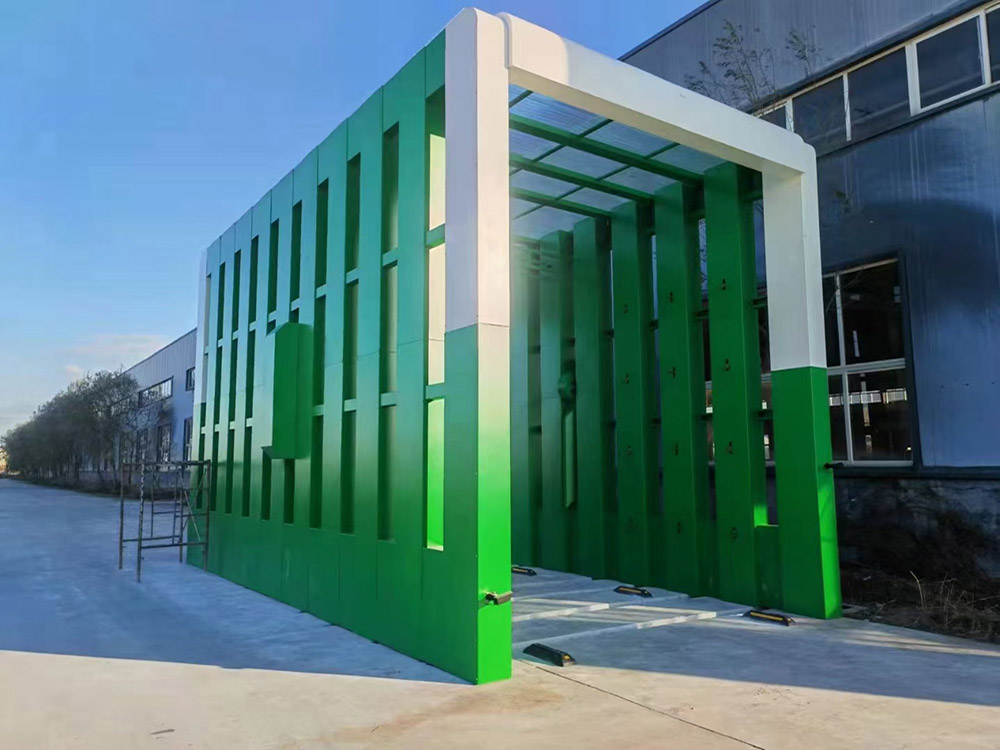
Fixed-station washers are permanently installed at a specific location on the construction site, typically near the fleet yard or entrance/exit. They’re available in cold-water, hot-water, or combination models, and often feature additional components, such as water recycling systems, to help with compliance and reduce water usage.
Best suited for: Construction sites with a dedicated fleet yard and consistent cleaning needs. They’re ideal for sites where compliance with environmental regulations is a priority, as water recycling systems can be easily integrated. Fixed-station models typically offer higher pressure and flow rates than mobile models, making them suitable for heavy-duty equipment.
Limitations: Lack of portability—they can only clean vehicles that are brought to the station. High upfront installation costs, as they require permanent water and power connections. Not ideal for remote sites or sites with changing work zones.



 Spanish
  English
  German
  French
  Portuguese
  Japanese
  Russian
  Italian
  Arabic