
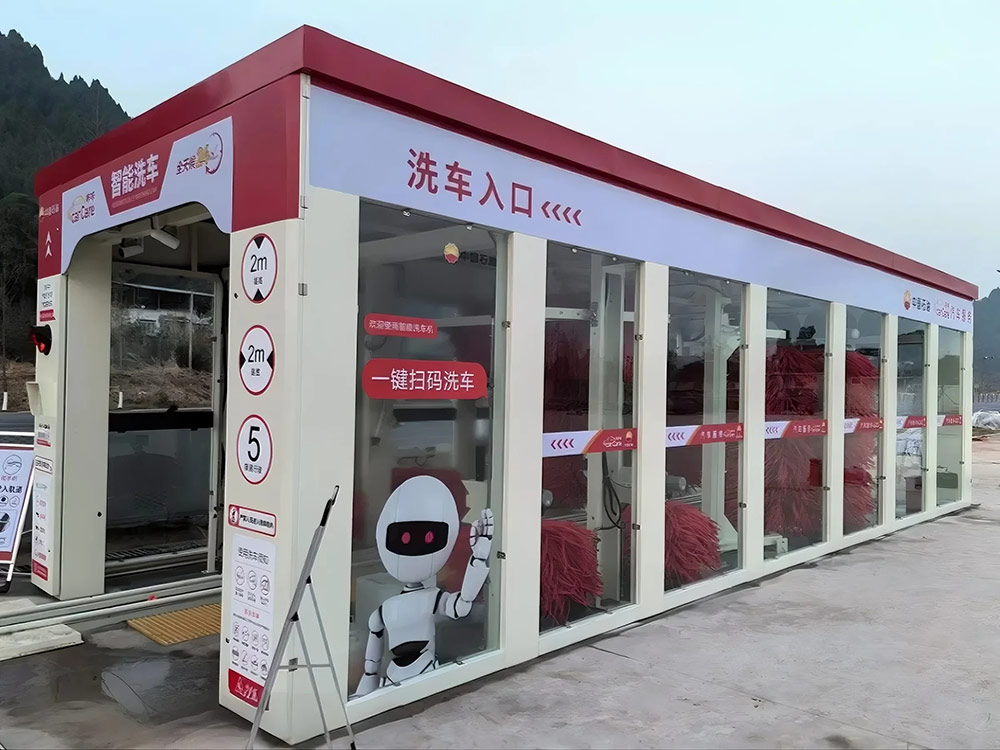
Tunnel car washing machines have revolutionized the car wash industry by enabling high-volume, consistent cleaning with minimal manual intervention. Invented in the United States, these systems operate on a streamlined, sequential process that moves vehicles through a series of cleaning stages via a conveyor belt. Understanding how each component works is essential for operators to ensure optimal performance, troubleshoot issues effectively, and maintain high-quality service. Below is a detailed step-by-step breakdown of the tunnel car washing machine’s operation.
The process begins with vehicle positioning. The driver pulls onto a conveyor belt, which is typically equipped with guide rails to ensure the vehicle is aligned correctly. Once the vehicle is in place, the driver shifts to neutral, and the conveyor system activates, pulling the vehicle through the tunnel at a steady speed—usually around 1 to 2 feet per second. This consistent movement ensures each cleaning stage is completed thoroughly without rushing or delays.
The first cleaning stage is pre-rinsing. High-pressure water nozzles, often mounted on oscillating arms, spray the entire vehicle to remove loose dirt, dust, and debris. These nozzles are designed to cover every surface, including the hood, roof, sides, and wheels, using adjustable pressure to avoid damaging the vehicle’s finish. Some advanced systems use AI visual recognition to detect the vehicle’s outline and adjust the water pressure and nozzle angle accordingly, ensuring thorough rinsing without waste.
Next comes the application of cleaning solution. After pre-rinsing, foam dispensers spray a specialized cleaning agent onto the vehicle. This solution is formulated to break down tough stains, grease, and road grime while lubricating the surface to prevent scratches during the brushing stage. The foam is applied in a thick, even layer, often using air-assisted sprayers to create a consistent coating that clings to the vehicle’s surface for maximum effectiveness.
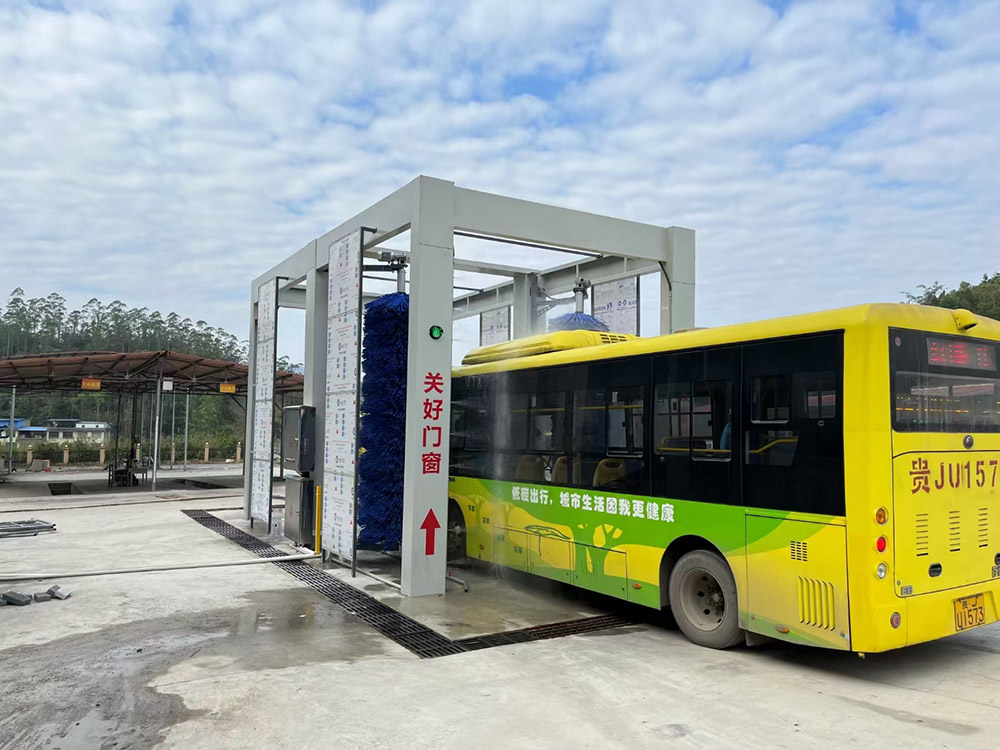
The core cleaning stage involves brush agitation. Multiple sets of brushes—including large side brushes, a top brush, and wheel brushes—rotate to scrub the vehicle’s surfaces. These brushes are made from soft, durable materials that conform to the vehicle’s shape, ensuring no area is missed. The side brushes are typically adjustable, moving in and out to accommodate different vehicle sizes, while the top brush follows the contour of the roof and windshield. Some systems also include a chassis wash stage, where high-pressure nozzles underneath the conveyor belt clean the vehicle’s undercarriage, removing accumulated dirt and salt that can cause corrosion.
After brushing, the vehicle moves to the rinsing stage, where high-pressure water nozzles remove all traces of cleaning solution and loosened dirt. This is followed by a water wax application, which adds a protective layer to the vehicle’s finish, enhancing shine and repelling water. The final stage is drying: powerful blowers, often mounted on adjustable arms, direct high-velocity air across the vehicle’s surface to remove excess water. Some systems include polishing brushes to further enhance the shine and ensure a streak-free finish. Once the process is complete, the conveyor belt moves the vehicle out of the tunnel, and the driver can exit safely.
 Spanish
  English
  German
  French
  Portuguese
  Japanese
  Russian
  Italian
  Arabic