
Car washing process steps
1. Vehicle preparation
Park the vehicle in the designated area, close the windows and sunroof, and retract the antenna and rearview mirror. Manually remove large pieces of sediment, such as dirt accumulated under the wiper.
2. Pre rinsing
High pressure water guns spray from multiple angles to wash away floating dust and sediment on the surface of the vehicle. Focus on cleaning the engine hood, wheels, and other parts.
3. foam spraying
Specially designed cleaning agent automatically sprays, softens stains and lubricates surfaces. After covering the entire vehicle, stay for about 1-2 minutes.
4. Clean and scrub
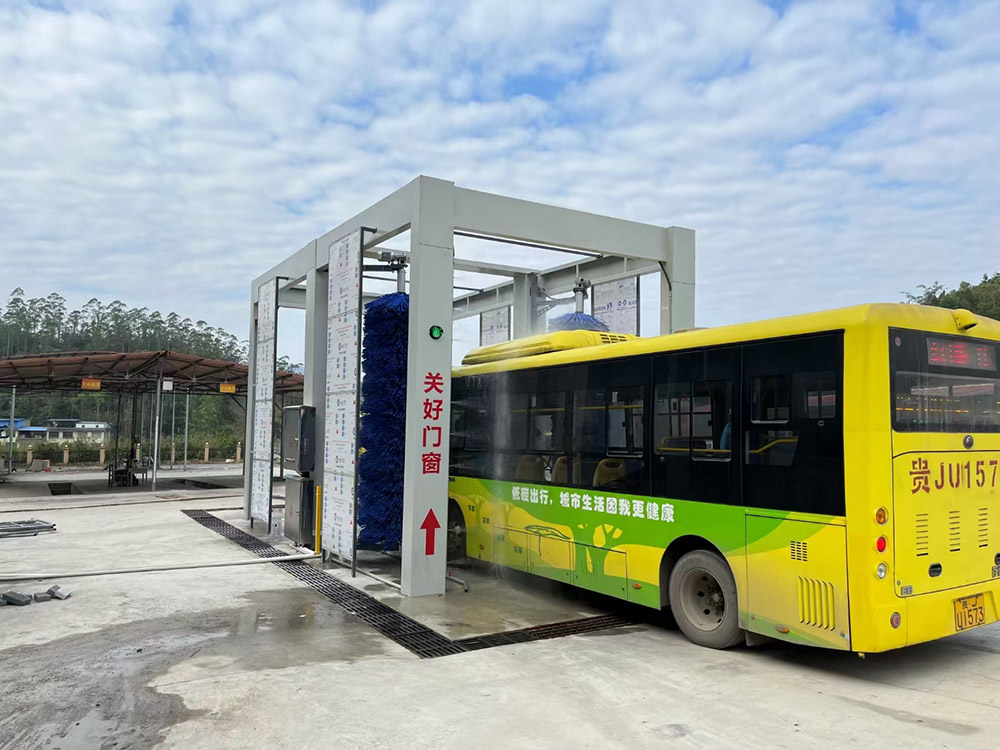
The contact car washing machine uses a rotating roller brush combined with cleaning agent to scrub the car body. Contactless cleaning relies on high-pressure water flow to complete the cleaning process
5. Fine rinsing
Use a high-pressure water gun to clean foam, sediment and dirt residue again, to ensure that there is no cleaner residue on the car body.
6. Air drying treatment
A powerful fan blows away water droplets. Some machines spray water wax to increase temporary gloss, and the effect lasts for about 3-5 days.
Potential risks and protection
1. Car paint damage
If the roller brush of the contact car washing machine is not cleaned regularly, it may carry sand and dust, causing fine scratches or sun marks. Although non-contact has no physical friction, high-pressure water guns may also damage the paint surface if the water quality is poor.
2. Accessory detachment
Unfolded antennas, modified wipers, and other components may be removed by the rolling brush. In the real case, the car owner suffered a loss of 600 yuan.
3. Clean dead corners
Chassis rust, brake powder on the inner side of the wheel hub, and other areas cannot be thoroughly cleaned, which may accelerate component aging in the long run.
4. Equipment hazards
Some low-priced equipment that uses recycled water, strong acid and alkali cleaning agents, or bristles that age and harden can exacerbate paint damage.
Safety and reliability: Contactless car washing machines have a lower risk of physical friction, but require good equipment maintenance. If a soft bristled brush, neutral cleaning agent, and regular maintenance are used for contact type, the risk can be reduced.
Usage suggestions and precautions
1. Equipment selection
The non-contact car washer is preferred, relying only on high-pressure water and foam. Contact type requires observing whether the roller brush is clean and free of blackening, and whether there is no standing water on the ground. Old machines pose a higher risk.
2. Preparation before operation
The antenna must be retracted, the rearview mirror must be folded, and all windows must be closed. It is recommended to choose manual car washing for new cars, dark paint, film coated cars, or luxury models.
3. Post washing treatment
Immediately wipe off any water stains on the glass and chrome plated strips with a towel. Polish the paint surface once a quarter to repair minor scratches.
4. Special Scene
Wash the car promptly after rain, as acid rain and bird droppings are highly corrosive. It is advisable to wash the car 1-2 times a month. Excessive cleaning can accelerate the oxidation of the paint surface.
5. Taboos during car washing
Keep the vehicle idling throughout the entire journey and do not turn off the engine. Avoid water entering the engine. Do not step on the brake or use the automatic wiper, as it may damage the equipment.
6. Budget and Requirements
If you are in a hurry or pursuing cost-effectiveness, you can choose automatic car washing. It is recommended to choose manual car washing when pursuing thorough cleanliness or high vehicle value.



 German
  English
  French
  Portuguese
  Japanese
  Russian
  Italian
  Spanish
  Arabic